What it is
A 2200 W microcrystalline ceramic heating element. It is not a complete instant-heating module.
LL-JRB-004A is the heating section of an OEM water appliance. It combines the heating path, water housing, inlet/outlet sensing and dual temperature protection. The appliance supplies the pump, valves, main controller and system-level safety logic.
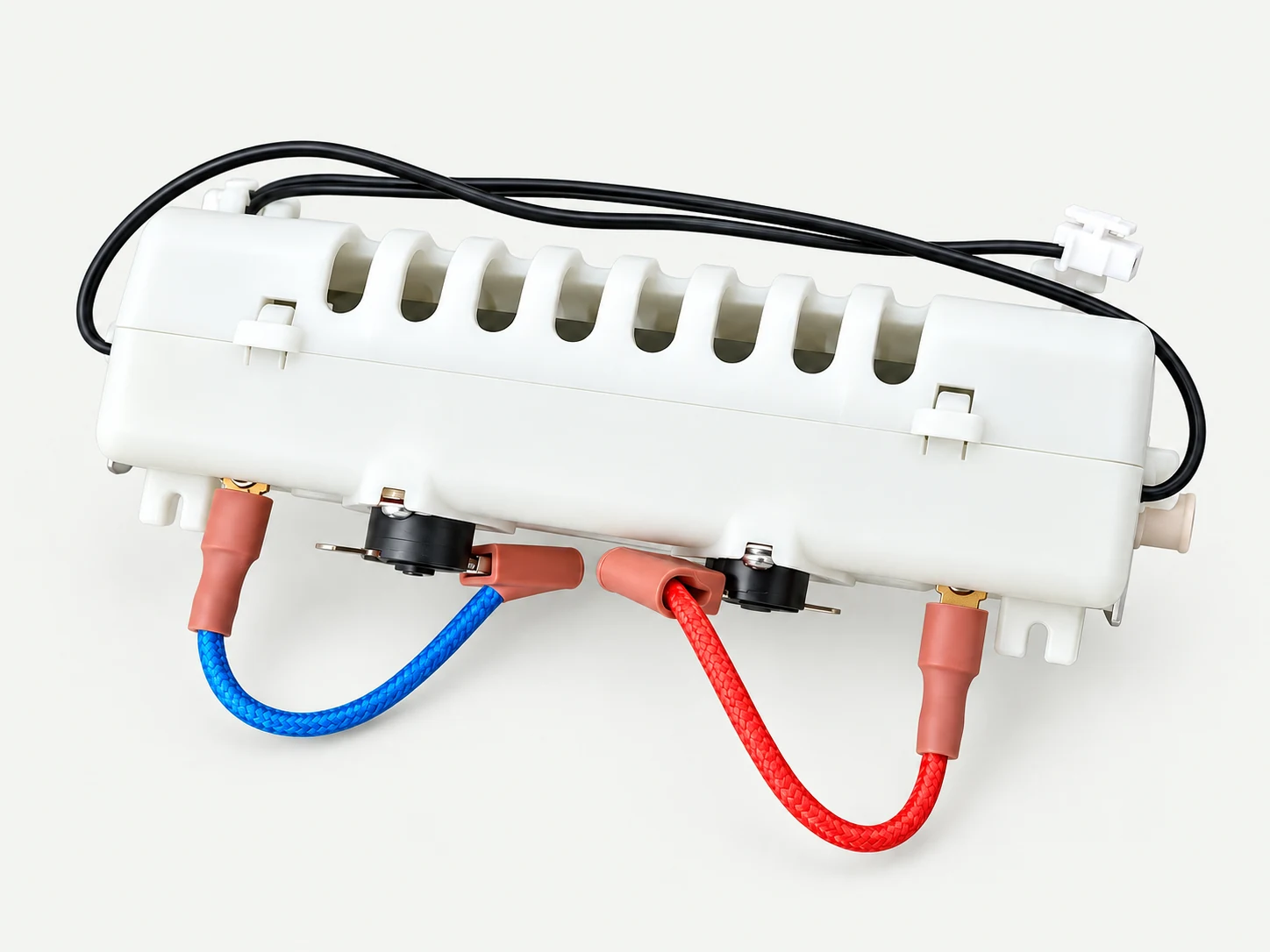
A 2200 W microcrystalline ceramic heating element. It is not a complete instant-heating module.
A balanced 2200 W option in the shared 004 housing for projects prioritizing integration space, service life and moderate power.
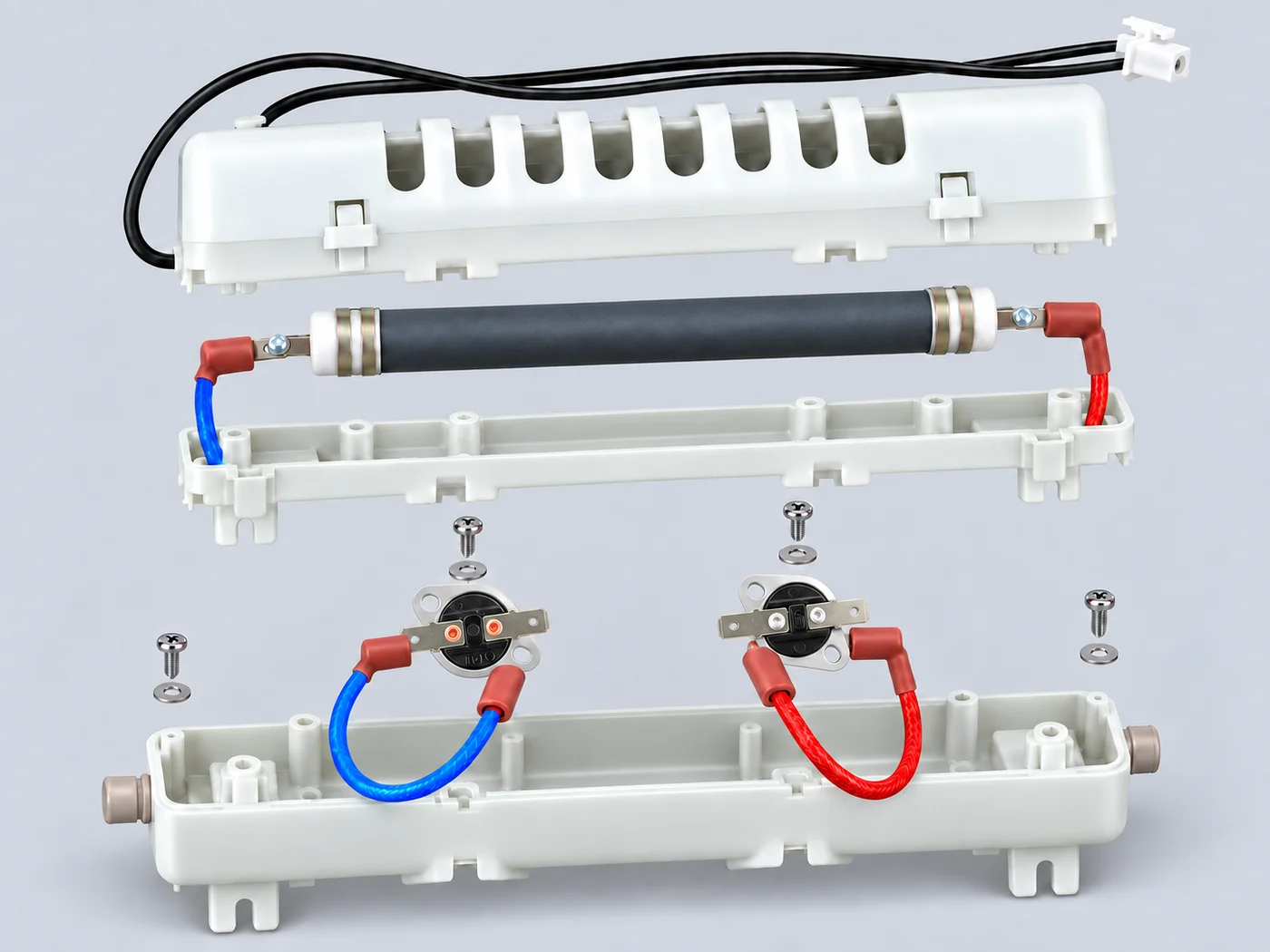
Heating path and water housing, inlet/outlet sensing points, 135°C auto-reset protection and 145°C manual-reset protection.
Pump and flow control, valves, 220 V power architecture, main controller, grounding, dry-heating protection and whole-appliance compliance.
The sequence covers the assembled element, alternate view, interfaces, installation envelope, internal structure and protection design.
01 · Complete product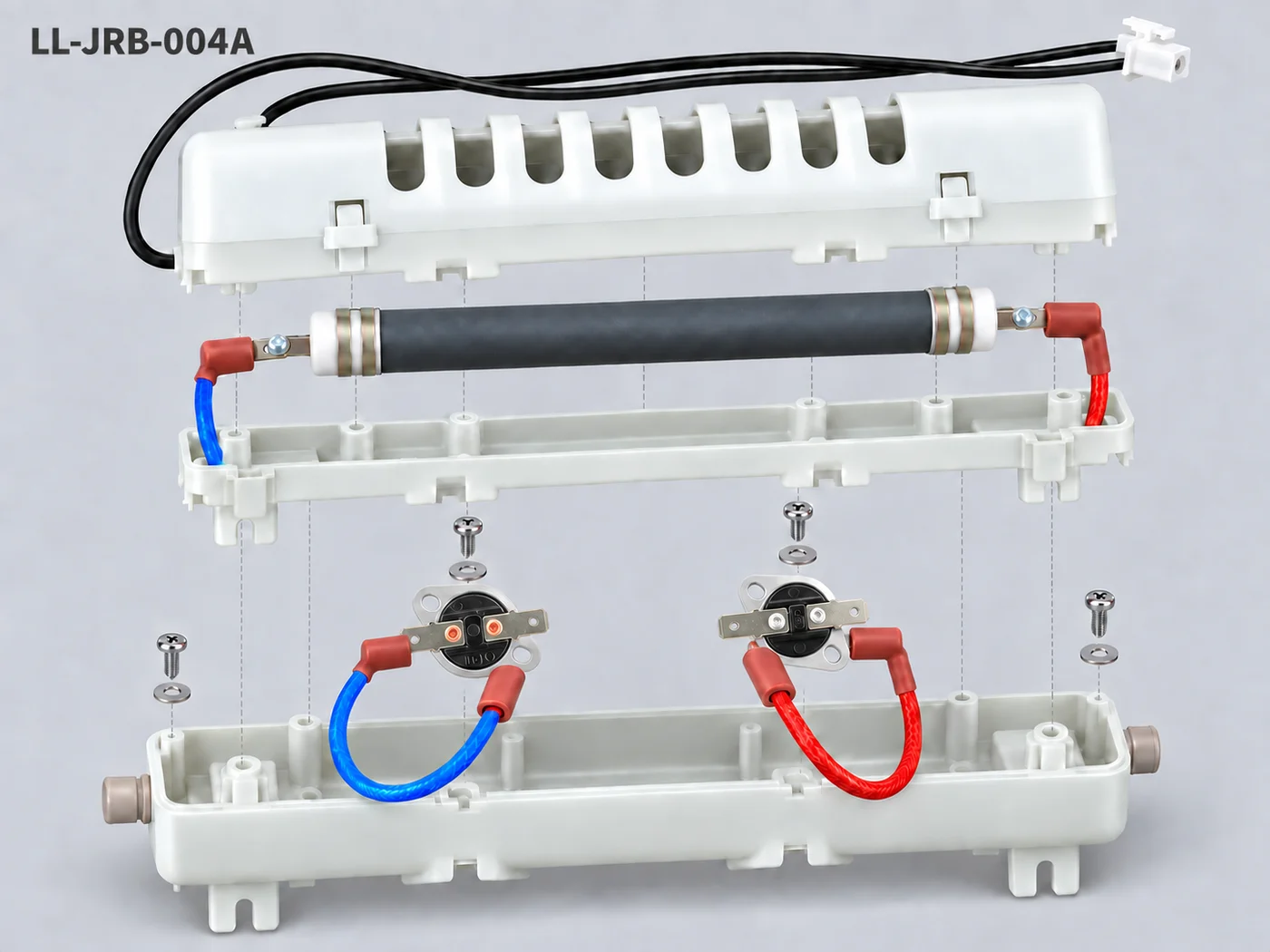 Water inletOutlet upwardNTC · power · protection50 × 36 × 155 mmVertical · outlet upward
It is not a guaranteed hot-water output. Final outlet temperature and hot-water flow depend on inlet temperature, target temperature, pump curve, voltage, control logic and duty cycle, and must be validated in the target appliance.
Both models use the same 50 × 36 × 155 mm housing and require vertical installation with the outlet upward. Select by rated power, water-path target, protection setting and the appliance electrical design.
The flow values above are room-temperature water-path specifications, not guaranteed hot-water output.
LELING supplies the heating element and its component-level protection. The OEM appliance completes water delivery, power control and whole-system safety.
Install vertically with the water outlet facing upward. Confirm water connectors, NTC terminals, power terminals, grounding, cable routing and the dry-heating protection sequence in the appliance drawing review.
Water inletOutlet upward220 V AC · NTC| Model | LL-JRB-004A |
|---|---|
| Product type | Heating element, not a complete heating module |
| Rated supply | 220 V AC ±10%, 50 Hz |
| Rated power | 2200 W, +5% / −10% |
| Dimensions | 50 × 36 × 155 mm |
| Rated pressure | 0 MPa |
| Thermal efficiency | ≥97% |
| Room-temperature water flow | 2000 mL/min |
| Rated service life | >10,000 h |
| Heating path / housing | Microcrystalline ceramic tube · nylon housing |
| Installation | Vertical, outlet upward |
| NTC sensors | Inlet + outlet, R25=100K±1%, B25/50=3950±1% |
| Dielectric strength | 2000 V AC / 60 s, leakage ≤5 mA |
| Leakage current | ≤0.5 mA at 234 V / 10 s |
| Ground resistance | <0.1 Ω at 25 A / 10 s |
| Leak test | 18 kPa / 5 s, leakage ≤15 mL |
| Temperature protection | 135°C auto reset + 145°C manual reset |
Dry heating is prohibited. Water flow and protection sequencing must be established by the appliance controller.
Use the approved public information on this page for initial screening. Before fixing the appliance design, request the current product drawing and confirm that its revision matches the proposed sample.
Document detail depends on the project stage. Confidential CAD, BOM, supplier information and unverified certificates are not published on the website.
Request current documentsCompare the pump, controller, water-path and safety responsibilities before selecting.
Read guide →Use the water-energy balance as a first-pass screen, then validate the real appliance.
Read guide →Start with the system boundary, operating conditions and appliance interfaces.
Read guide →No. It is a heating element. The appliance must provide the pump, valves, main controller, power architecture and system-level protection.
No. It describes the water-path test at room temperature. Hot-water output must be calculated and validated for the required temperature rise and appliance cycle.
Vertically, with the outlet facing upward. The final drawing review must also confirm terminals, grounding, cable routing and available space.
No. Dry heating is prohibited. The appliance must establish water flow and protection logic before energizing the heater.
Share inlet temperature, target outlet temperature, required flow, supply, available vertical space, control architecture and annual quantity.